


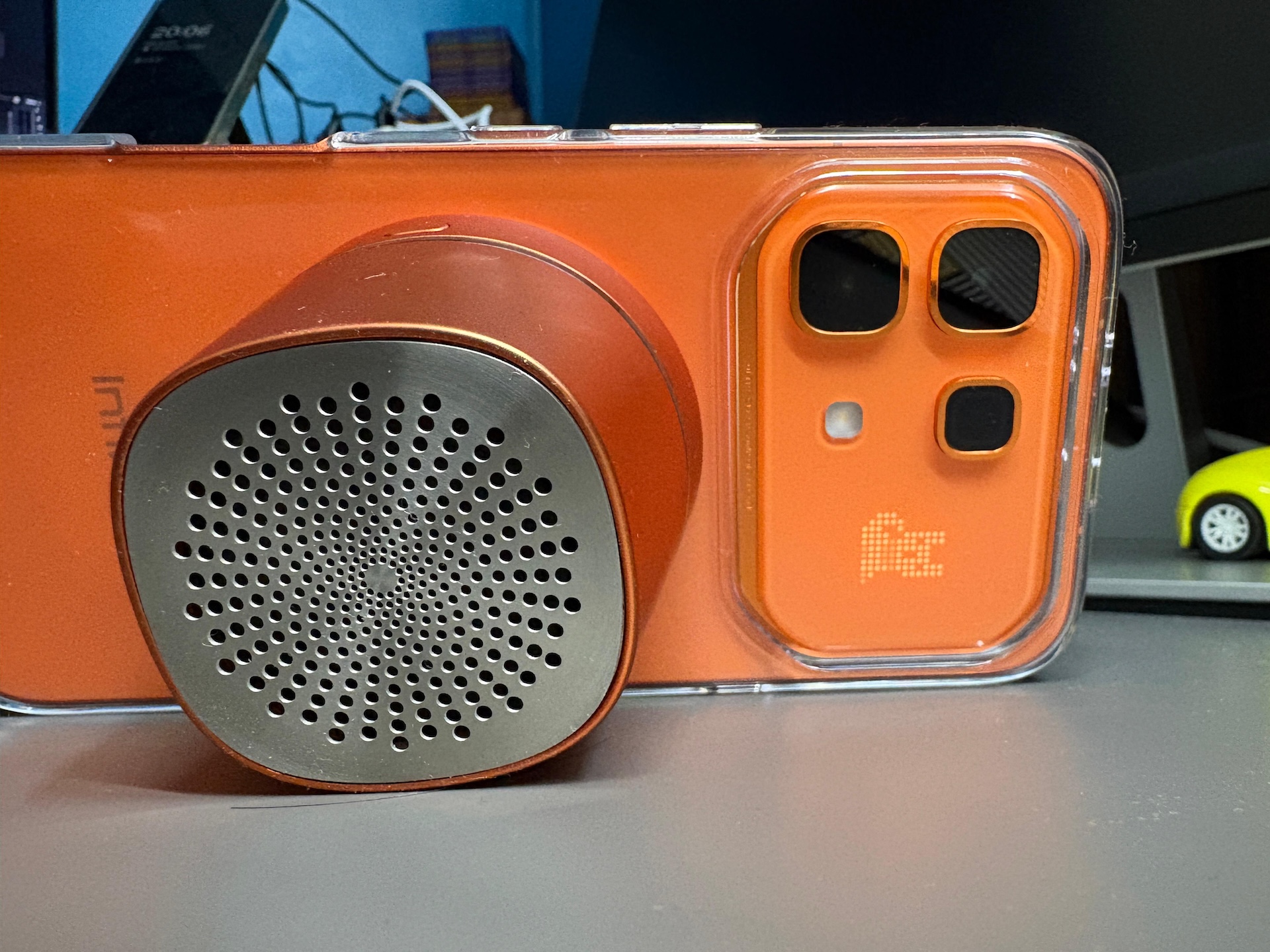
If you have been browsing for a new smartphone lately, you might have come across the Infinix Note 60 Pro. On paper, it looks like one of the coolest phones available in the market right now. It is flashy, it has an incredibly eye-catching design, and it comes packed inside a massive box filled to the brim with accessories.
At first glance, it feels like an unbeatable deal. In fact, depending on where and when you look, platforms like Flipkart have shifted how they bundle these extras, but they are still heavily promoted on Infinix’s official website. This ecosystem in a box is exactly what makes the phone stand out in a crowded marketplace.
But as the old saying goes: all that glitters is not gold. While my first impression of the phone itself was incredibly positive, taking a deeper look at the bundled accessories forced me to ask a critical question: Are these freebies actually adding value, or are they just clever marketing gimmicks to make you choose Infinix over established competitors?
Let’s break down the phone, the unboxing experience, the actual utility of the accessories, and whether this package is truly worth your hard-earned money.

Buy from Amazon : https://afftrack.jsnsoft.com/go/paKo5jcTZh2jItMv
First Impressions: The “iPhone Clone” Aesthetic
Let’s talk about the design first because Infinix has done a spectacular job here. The moment you pull the phone out of its massive box, you are greeted by an incredibly beautiful device. It sports a glossy, shiny back panel that immediately turns heads.
To be completely honest, it looks strikingly similar to an iPhone 15 Pro Max or iPhone 16 Pro Max. The camera layout and the color choice mimic that high-end, premium titanium aesthetic. If you care about looks and want a phone that punches way above its price tag in the style department, the Note 60 Pro nails it.
The Core Specs: A Mid-Range Beast
Before we dissect the accessories, we need to acknowledge that the smartphone itself is an absolute powerhouse for its price range. Typically retailing under ₹30,000 (and often hovering around ₹27,000 to ₹28,000 after bank discounts), the hardware specs are genuinely impressive:
- 144Hz Refresh Rate Display: The screen is buttery smooth. Scrolling through social media, navigating the UI, and playing games feels incredibly fluid.
- Massive Battery: It features a highly optimized battery that easily lasts a full day of heavy usage, meaning you don’t have to constantly look for a power outlet.
- In-Display Fingerprint Sensor: The biometric authentication is snappy and reliable.
- Innovative Health Sensor: One of the coolest hidden features is the built-in health sensor. By simply placing your finger on the sensor, you can measure your heart rate and blood oxygen (SpO2) levels directly through the phone.
- AI Integration & Action Button: The software comes integrated with smart AI features, alongside a physical ‘Action Button’ heavily inspired by recent iPhones, which works perfectly for quick shortcuts.
Judging the device purely as a standalone smartphone, it is easily one of the finest, coolest options available in the under-₹30,000 segment today.
The Elephant in the Box: Testing the Accessories
The major selling point of this phone is the ecosystem bundle. Infinix gives you a specialized MagSafe-compatible phone case, a 90W fast-charging bricks, and a unique desktop device that pulls double duty as a wireless charger and a Bluetooth speaker.
It sounds like a tech lover’s dream. But how do these accessories hold up in real-world usage? Let’s look closer.
1. The Charging Dilemma: 90W Wired vs. 5W Wireless
In an era where tech giants like Samsung and Apple have completely stripped adapters out of the box, Infinix deserves praise for including a massive 90W fast-charging adapter. This wired charger is a beast—it can juice up the phone from zero to full in less than an hour and a half.
However, this brings us to the bundled wireless charger.
To use the wireless charger, you must first snap on the included MagSafe case, because the phone’s back panel doesn’t have built-in magnets. Once you set it up, you realize a frustrating truth: the wireless dock only charges at 5W.
Think about the math here. You have a 90W wired charger that tops your phone up in an hour. On the other hand, you have a 5W wireless charger that forces you to wait 3 to 4 hours for a full charge. Why would anyone choose to wait three times longer just for the novelty of wireless charging?
If you truly want a productive wireless setup, you can buy a third-party 3-in-1 wireless charger power bank for around ₹2,000. For instance, many third-party options on the market offer a 10,000 mAh capacity, faster wireless speeds, and double as a sturdy phone stand. Compared to those, Infinix’s bundled wireless charger feels sluggish and impractical.
2. The Sound Test: The Bundled Speaker vs. An ₹800 Alternative
The second feature of the bundled desktop accessory is the Bluetooth speaker. When you power it on, it flashes some neat LED lighting effects, which look cool on a desk. But the praise stops the moment you actually play music.
Even at maximum volume, the audio output is incredibly low, thin, and lacking in depth.
To put this into perspective, I compared it directly against a budget third-party speaker—the Portronics Bounce II, which costs a mere ₹799. When connected to the Portronics speaker, the difference was night and day. The ₹800 budget speaker was significantly louder, offered punchier bass, and delivered much clearer vocal clarity than the “premium” accessory bundled by Infinix.
Furthermore, the Infinix speaker lacks basic physical buttons for volume control or track skipping. On the flip side, a cheap retail speaker like the Portronics gives you physical buttons, a Bluetooth mode, a USB playback port, and even built-in FM radio.
3. The Missing Ecosystem
When a brand markets a phone alongside a matching speaker and charger, you expect a seamless ecosystem experience. You expect that when you magnetically snap the phone onto the dock, it will automatically route the audio to the speaker via NFC or a proprietary smart connection.
Unfortunately, there is no ecosystem here.
The speaker behaves like any generic, cheap Bluetooth speaker. You have to open your phone’s settings, manually search for the Bluetooth signal, pair it, and connect every single time. It feels disconnected and poorly integrated.
Should You Buy It?
The under-₹30,000 smartphone market in India is fiercely competitive. You have incredible, polished options from brands like OnePlus, Samsung, and Nothing (like the Nothing Phone 2a or CMF Phone).
If you are thinking about switching over to Infinix solely because of the massive box and the promise of “free premium accessories,” I would strongly advise against it. The reality is that the bundled speaker is subpar compared to a standard ₹800 retail speaker, and the wireless charger is too slow to be genuinely useful. You can easily buy a superior third-party power bank charger and a much better Bluetooth speaker separately for less than ₹3,000 total, and still keep your overall budget well under ₹30,000.
However, there is a catch. If you disregard the accessories entirely and look at the Infinix Note 60 Pro purely as a standalone smartphone, it is an exceptional device. If you love the striking iPhone-inspired aesthetic, want a gorgeous 144Hz screen, care about unique features like the integrated health sensor, and value the lightning-fast 90W wired charging adapter, this phone will not disappoint you.
The choice ultimately comes down to your priorities:
- Buy it if you love the design, the display, and the core phone features. Treat the accessories as a fun, visual bonus for your desk setup.
- Pass on it if you are buying it strictly for the “value” of the bundle, because you can build a much better accessory ecosystem on your own.
What do you think? Do you think these bundled accessories are a genuine value-add, or are they just a clever marketing gimmick? Would you choose this over a OnePlus or a Samsung device? Let me know your thoughts in the comments below!
